
Should I get braces or clear aligners? We hear this question almost every day from patients exploring orthodontic treatment. Each option can deliver a beautiful, healthy smile, but they work differently and suit different needs. Understanding how each treatment functions, what lifestyle factors matter, and which cases respond best to each approach will help you feel confident about your decision. Knowing the differences between braces vs. clear aligners is the first step toward choosing what's right for your smile.
Our board-certified diplomates of the american board of orthodontics at Feldman Orthodontics in Connecticut offer advanced braces technology and clear aligner systems, so your treatment recommendation is based entirely on what will work best for you, not a limited set of treatment plans.
What Are Braces and Clear Aligners?
Braces are fixed orthodontic appliances that use brackets and wires bonded to teeth, while clear aligners are removable transparent trays custom-made to shift teeth gradually. Both correct misalignment and bite issues but differ in visibility, compliance requirements, and case suitability. At Feldman Orthodontics, we offer both treatment plans so patients can choose the approach that fits their needs.
Braces
Braces are fixed appliances. Small brackets are bonded to the front surface of each tooth, and an archwire threads through them to create the force that shifts teeth over time. Braces stay on your teeth throughout treatment, and your orthodontist makes periodic adjustments to keep things progressing. They've been the gold standard in orthodontics for decades, and today's designs are far smaller and more comfortable than what most people picture.
Clear Aligners
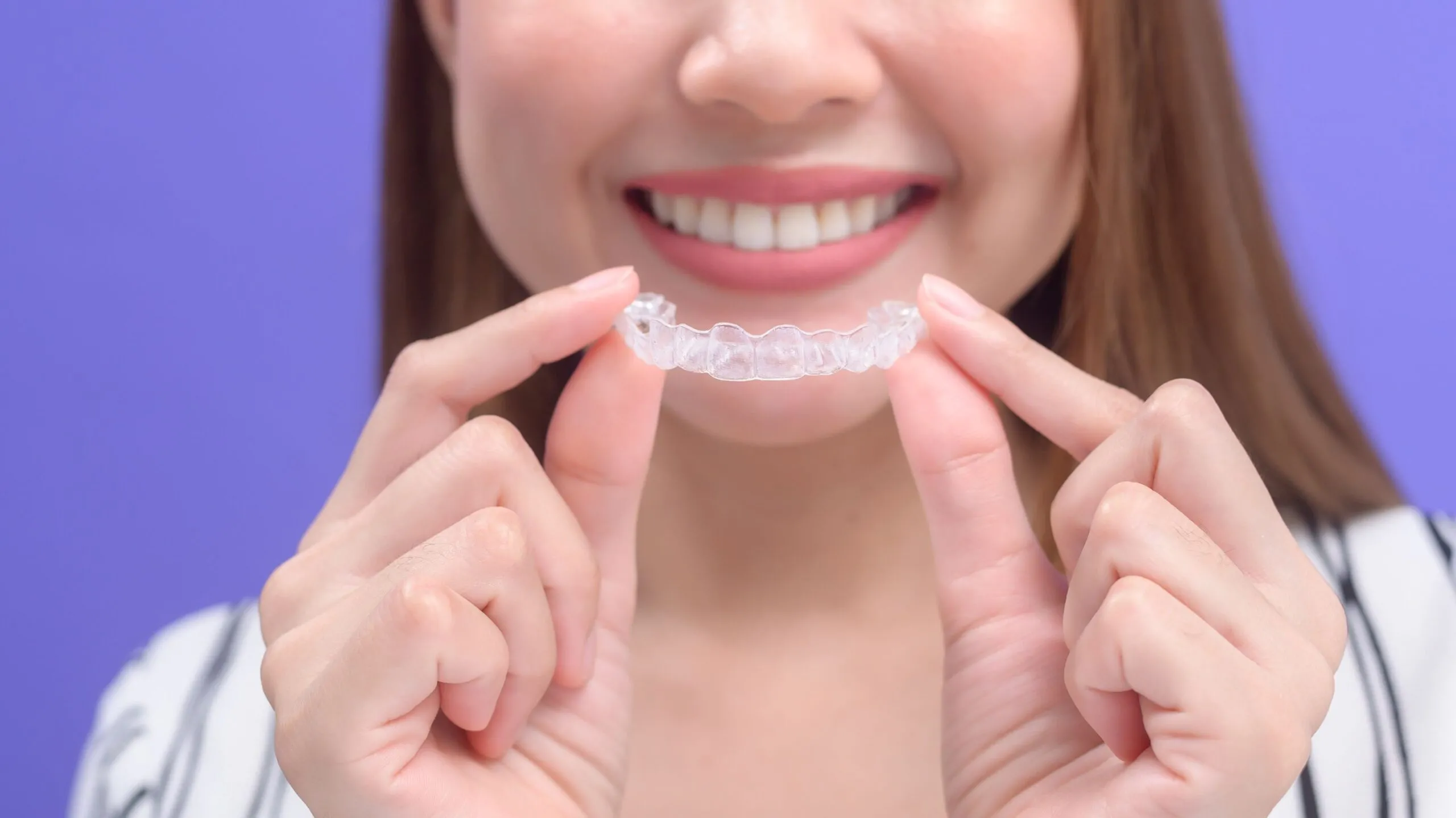
Clear aligners are removable appliances. Instead of brackets and wires, you wear a series of custom-made transparent trays that fit snugly over your teeth. Each tray is slightly different from the last, nudging specific teeth a fraction of a millimeter at a time. You swap to a new set every one to two weeks.
Here's the key distinction: braces give your orthodontist direct, mechanical control over tooth movement at every appointment. Clear aligners rely on a combination of digital treatment planning and patient compliance, since the trays only work when they're actually in your mouth.
One isn't better than the other across the board. The right choice depends on your specific orthodontic needs, your daily habits, and what your orthodontist recommends after a clinical evaluation. Some patients are strong candidates for either treatment, while others will get noticeably better results with one over the other. That's exactly why a professional assessment matters before making this decision.
How Does Each Treatment Work?
Braces use fixed brackets and wires to reposition teeth, while clear aligners use a series of removable, custom-made trays. Each method moves teeth by applying controlled, consistent pressure over time, but through different mechanisms.
With traditional braces, brackets are bonded directly to each tooth and connected by an archwire that guides teeth into proper position. Your orthodontist adjusts the wire at regular appointments, gradually shifting teeth toward their ideal alignment. Today's brackets are smaller and more comfortable than older designs. The difference is noticeable.
LightForce custom 3D-printed braces take this concept further. Using digital treatment planning and iTero scanning technology, each bracket is designed specifically for your tooth anatomy and treatment goals. Our orthodontists in Connecticut have years of specialized training in these advanced systems. This precision can mean more efficient tooth movement and potentially shorter treatment time.
What about the aligner approach? Clear aligners work through a series of custom-made, transparent trays. Each set applies gentle pressure to specific teeth, moving them incrementally. You wear each set for one to two weeks before switching to the next in the series. Aligners need to stay in your mouth 20 to 22 hours daily to work effectively.
Both treatments require check-in appointments so your orthodontist can monitor progress and make adjustments. Braces typically involve visits every four to eight weeks for wire changes. Aligner patients come in less frequently, often every six to ten weeks, to pick up new trays and confirm everything is tracking properly.
Treatment timelines vary based on your specific case. Braces generally range from 12 to 36 months depending on complexity. Clear aligners often work within 6 to 18 months for eligible cases, though more involved corrections may take longer.
Benefits of Braces and Clear Aligners
Each treatment offers distinct advantages. The right choice depends on your orthodontic needs, lifestyle preferences, and personal priorities.
Why Do Patients Choose Braces?
- Handles complex cases effectively. Severe crowding, significant bite issues, and rotated teeth often respond better to the precise control braces provide.
- No compliance worries. They work around the clock because they're always on your teeth. You can't forget to wear them or lose them.
- LightForce precision. Our custom 3D-printed brackets are designed using digital planning, creating a treatment that's 100% customized to your smile.
- Works for all ages. Children, teens, and adults all achieve excellent results with braces. Age is rarely a limiting factor.
Why Do Patients Choose Clear Aligners?
- Nearly invisible. Most people won't notice you're wearing aligners, making them popular for adults and image-conscious teens.
- Removable for eating and cleaning. Take them out for meals and brush your teeth normally. No food restrictions.
- Smooth and comfortable. No brackets or wires means less irritation to your cheeks and lips. Many patients adjust within a day or two.
- Fewer practice visits.
What Benefits Do Both Treatment Plans Share?
Regardless of which treatment you choose, straightening your teeth improves more than your appearance. Properly aligned teeth are easier to clean, which reduces your risk of cavities and gum disease. Correcting bite issues can relieve jaw tension and uneven tooth wear.
A smile you love shows up in job interviews, first dates, and family photos. Research also links improved oral alignment to better long-term dental health, since crowded or overlapping teeth create hard-to-reach areas where plaque builds up. At Feldman Orthodontics, our board-certified diplomates of the american board of orthodontics help patients experience all of these benefits with both treatment plans.
Braces vs. Clear Aligners: Which Is Right for Your Smile?
| Factor | Braces | Clear Aligners |
|---|---|---|
| Appearance | Metal or ceramic brackets visible on teeth | Virtually invisible transparent trays |
| Comfort | Low-profile brackets; some adjustment soreness | Smooth plastic; mild pressure with new trays |
| Removability | Fixed in place throughout treatment | Removable for eating, drinking, brushing |
| Diet | Avoid hard, sticky, and crunchy foods | No restrictions when aligners are out |
| Oral Hygiene | Requires careful brushing around brackets and wires | Remove trays and brush normally |
| Compliance | Always working; no patient effort needed | Must wear 20-22 hours daily to be effective |
| Case Complexity | Excellent for complex movements and severe issues | Best for mild to moderate corrections |
| Visit Frequency | Every 4-8 weeks for adjustments | Every 6-10 weeks to monitor progress |
| Treatment Time | 12-36 months typical | 6-18 months for eligible cases |
The comparison above highlights general patterns, but every patient is different. Some complex cases that seem perfect for braces actually respond well to aligners with proper planning. The reverse is true, too. Some patients who prefer aligners discover braces will give them better results faster. That's why a professional evaluation matters so much. We offer every option in this comparison, including LightForce custom brackets, so your recommendation is never limited by what's available. Patients across our Connecticut locations benefit from having the full range of treatment plans to choose from.
What Factors Affect the Cost of Braces and Aligners?
The cost of braces and clear aligners depends on case complexity, treatment duration, appliance type, insurance coverage, and payment plan availability. For similar cases, braces and aligners often end up comparable in total cost, though individual estimates vary.
Here are the main factors that influence your investment:
- Case complexity: More severe crowding, significant bite corrections, or teeth that need substantial movement require longer treatment and more appointments.
- Treatment duration: A 12-month treatment requires fewer appointments and materials than a 30-month one, and duration directly affects your total cost.
- Appliance type: Traditional metal braces, ceramic braces, LightForce custom brackets, and various clear aligner brands each carry different lab and material costs.
- Insurance coverage: Many plans cover a portion of braces and clear aligners alike.
- Payment plans: Low monthly payment options can make treatment more accessible regardless of the appliance you choose.
Understanding these factors helps you plan financially and ask informed questions during your consultation. Our team at Feldman Orthodontics helps you understand your benefits and maximize your coverage. We also offer low monthly payment plans to make treatment accessible for families throughout Connecticut.
The most accurate way to understand your investment? Schedule a complimentary consult. We'll examine your smile, discuss your treatment plans, and provide a customized estimate.
How Do You Know Which Option Is Right for You?
The right choice between braces and clear aligners depends on your case complexity, compliance habits, appearance preferences, and your orthodontist's clinical recommendation. At Feldman Orthodontics, we walk patients through each of these factors so the decision feels clear. Weighing them honestly helps narrow your options.
Is Clear Aligner Treatment Right for You?
Clear aligners may be right for you if you have mild to moderate orthodontic needs and can commit to consistent daily wear. Patients who do well with aligners tend to be organized and motivated to follow the treatment protocol closely.
- Your case involves mild to moderate crowding or spacing
- Appearance during treatment is a high priority
- You're disciplined about wearing removable appliances consistently
- You want to eat without restrictions and brush without extra steps
Are Braces the Better Choice for You?
Braces may be the better choice if you have more involved orthodontic needs or prefer a "set it and forget it" approach. Many patients find braces simpler because there's nothing to remember to put back in after meals.
- You have complex orthodontic needs or severe malocclusion
- You'd rather not worry about wearing something 22 hours a day
- You're a younger patient who might lose or forget aligners
- Your orthodontist determines braces will achieve better results
Does Age Affect Your Treatment Plans?
Adults sometimes assume clear aligners are their only option, while teens think they're stuck with braces. Neither assumption is accurate. We've helped patients in their 60s and 70s achieve incredible results with braces, and plenty of teens thrive with clear aligners. Your teeth, bite, and bone health matter far more than your age when it comes to choosing a treatment.
Why Is a Professional Evaluation Essential?
Only an orthodontist can evaluate your teeth, bite, and jaw relationship to recommend the right treatment. Digital scans, X-rays, and a clinical examination reveal details you can't see in the mirror. Our board-certified diplomates of the american board of orthodontics will give you honest guidance based on what will actually work best for your smile, not a one-size-fits-all recommendation. Patients at our Connecticut locations receive this same thorough evaluation at every complimentary consult.
Frequently Asked Questions About Braces and Clear Aligners
Can you switch from braces to aligners mid-treatment?
Yes, switching mid-treatment is possible in certain situations. Patients occasionally transition from braces to aligners for the final stages of treatment, or vice versa. This depends on your specific situation and treatment progress. Your orthodontist will let you know if switching makes sense for your case.
Do clear aligners take longer than braces?
Not necessarily. For cases where both treatment plans are viable, treatment times are often similar. Aligners can sometimes finish faster for straightforward corrections, while braces may be quicker for complex movements. The biggest factor in timeline is your specific orthodontic needs, not the treatment type itself.
Are braces more effective than clear aligners?
Both produce excellent results when matched to appropriate cases. Braces handle certain complex movements more predictably, but clear aligners have become very effective for a wide range of corrections. Proper case selection is what drives successful outcomes, so the key is matching the treatment to your needs.
Can adults get braces, or are aligners the only option?
Adults absolutely can get braces, and many do. While clear aligners have become popular among adult patients for their discreet appearance, braces remain an excellent choice. Some adults actually prefer braces because there's nothing to remember to wear. Treatment works well at any age, and we see adult patients at our Connecticut practice every single day.
Do braces or aligners hurt more?
Here's the honest answer: both cause some discomfort, especially when teeth are actively moving. Braces may feel sore after adjustments, and brackets can occasionally irritate your cheeks. Aligners create pressure when you switch to a new set. Most patients find either option quite manageable. Over-the-counter relievers and orthodontic wax help during adjustment periods. If you're concerned about comfort, bring it up during your complimentary consult so your orthodontist can walk you through what to expect with each option.
Not sure which fits your family? Our North Haven Invisalign and braces team will walk you through both at a complimentary consult.